Lunar New Year: greet the person, honor the tradition
Explore a celebration shaped by many communities, and choose a greeting with care for language, family and local customs.
A shared season, many celebrations
The Smithsonian describes Lunar New Year as welcoming spring and a new year on a lunisolar calendar. In China it is commonly called Spring Festival. Across communities, celebrations have their own names and customs; one greeting or visual motif will not represent every family.
Avoid treating “Chinese New Year” and every Lunar New Year celebration as interchangeable. Ask which tradition your recipient celebrates, and use their preferred name and language.
Why “lunisolar” is a useful distinction
The Smithsonian’s National Museum of Asian Art describes the celebration using a lunisolar calendar. This matters because “lunar” in the everyday holiday name should not be taken to mean that the calendar ignores the solar year or the seasons. The Gregorian date consequently changes from year to year.
The museum also emphasizes regional differences. A page about Chinese Spring Festival can offer valuable context, but it should not be presented as a complete account of Korean, Vietnamese or every other new-year tradition. Ask which celebration your recipient observes before choosing symbols or translating a greeting.
Context source: National Museum of Asian Art — Lunar New Year ↗
The celebration does not end at midnight
In its account of Chinese traditions, the museum describes a fifteen-day season ending with the Lantern Festival. It mentions lanterns and tangyuan, sweet glutinous rice balls, among the customs associated with that final day. These are examples within a particular tradition, not a universal menu for everyone who celebrates Lunar New Year.
Knowing that there is a season rather than only one midnight moment can make your greeting more considerate. You might acknowledge a family reunion or a later gathering instead of assuming the recipient is available for a call on the first morning. Ask about the actual event you would like to share.
Context source: National Museum of Asian Art — Lunar New Year ↗
A useful brief for a personalized greeting
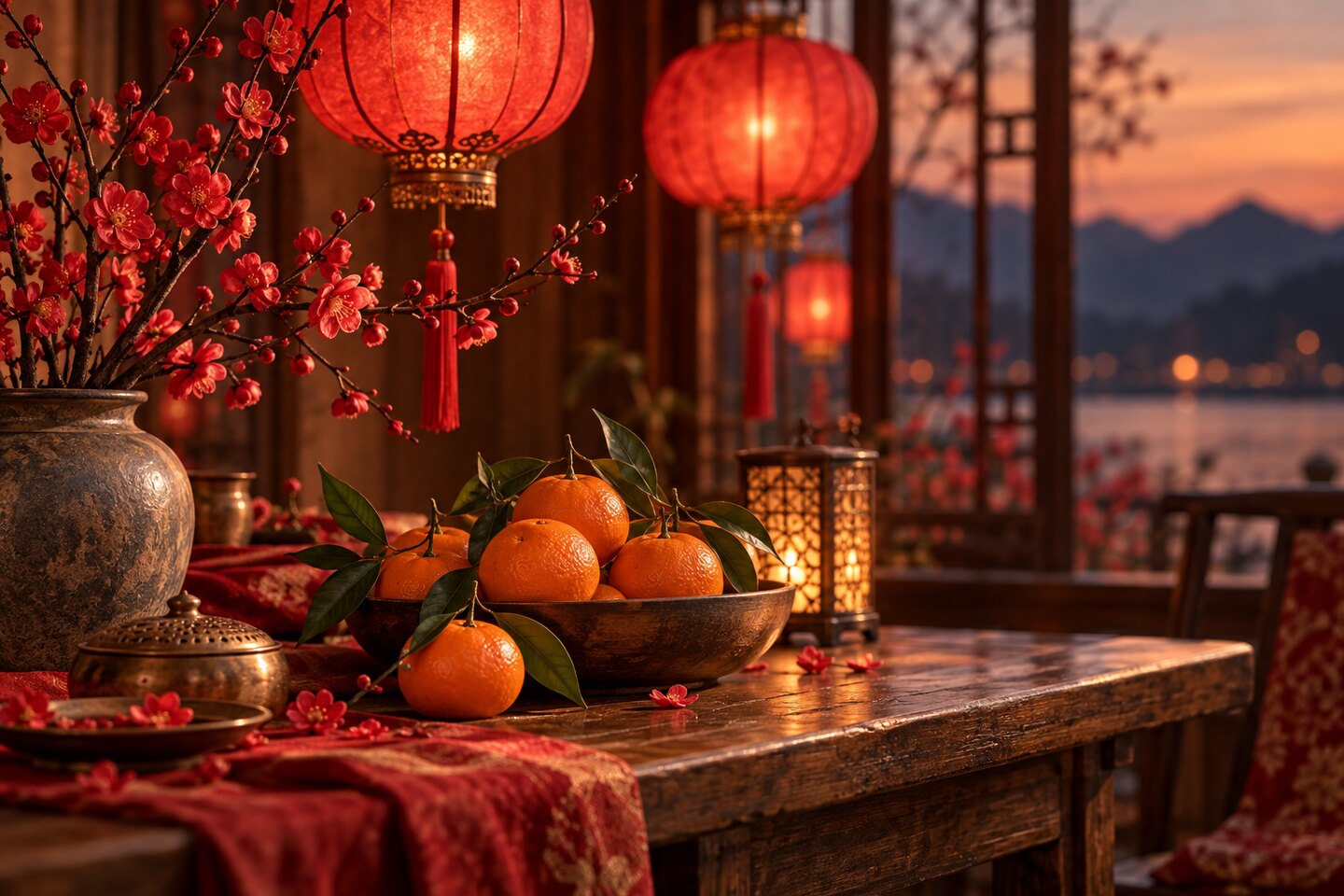
Write down four things before designing: the celebration’s preferred name, the language, a real family detail and the feeling you want the card to carry. “A warm greeting for my aunt, with the red lanterns from her front room and a short message in English” is a clearer starting point than “make it Asian.”
If the design includes zodiac imagery, verify that it is appropriate to the specific community and year. Avoid mixing decorative characters from different languages. If you cannot read the lettering, ask someone who can to review it rather than assuming an attractive image contains accurate words.
For a greeting to customers or a team, make participation optional and avoid treating culture as a marketing costume. A clear wish and an accurate name can be more welcoming than a crowded collage of unrelated symbols. Keep the creative invitation focused on the recipient rather than on proving how much the sender knows.
For a friend abroad, a shared meal memory can carry the emotion even when you cannot be together. Say what you miss: the conversation, a family joke or the walk after dinner. That detail belongs to your relationship and does not require you to summarize an entire celebration.
Follow the family’s lead
A memory of preparing a meal together, visiting relatives or decorating a home can make a greeting feel personal. If you are unfamiliar with a custom, ask rather than filling the artwork with symbols you do not understand.
The Gregorian date changes each year. Check the dated calendar and confirm local practice before scheduling. If you include zodiac imagery, verify the year and the recipient’s cultural context first.
Keep your wish clear and generous
A simple wish for happiness, health and time with loved ones can work when you do not know someone’s preferred traditional phrase. If you request a message in another language, have the wording reviewed by someone who reads it before sharing.
For a business greeting, acknowledge the celebration without assuming all customers observe it. Warm, specific language will travel further than a crowded design assembled from unrelated symbols.
A little starting inspiration
For a friend: “Wishing you a joyful new year and many happy moments with the people you love.”
For family: “However far apart we are, you’re close in every new beginning.”
These are original message suggestions. Add a name, a memory or an inside joke to make yours personal.
Create a Lunar New Year greeting →Common questions
Is Lunar New Year always Chinese New Year?
No. Chinese New Year is one celebration within a broader set of new-year traditions. Use the name that fits your recipient’s community and observance.
Should every card use the same zodiac animal?
Do not assume so. Confirm the year and cultural context first; regional traditions can use different zodiac conventions.
Sources & further reading
Historical context is summarized from the resources below. Our suggested messages and celebration ideas are original editorial suggestions.
Prepared with AI assistance and source checks on October 18, 2026. No specialist or community review is claimed. Traditions can vary; follow your recipient’s preferences. Historical context and original writing suggestions are distinguished in the text.