Diwali: sharing light, with a personal touch
A gentle introduction to the festival of lights, with thoughtful ways to greet family, friends and colleagues.
Begin with light and connection
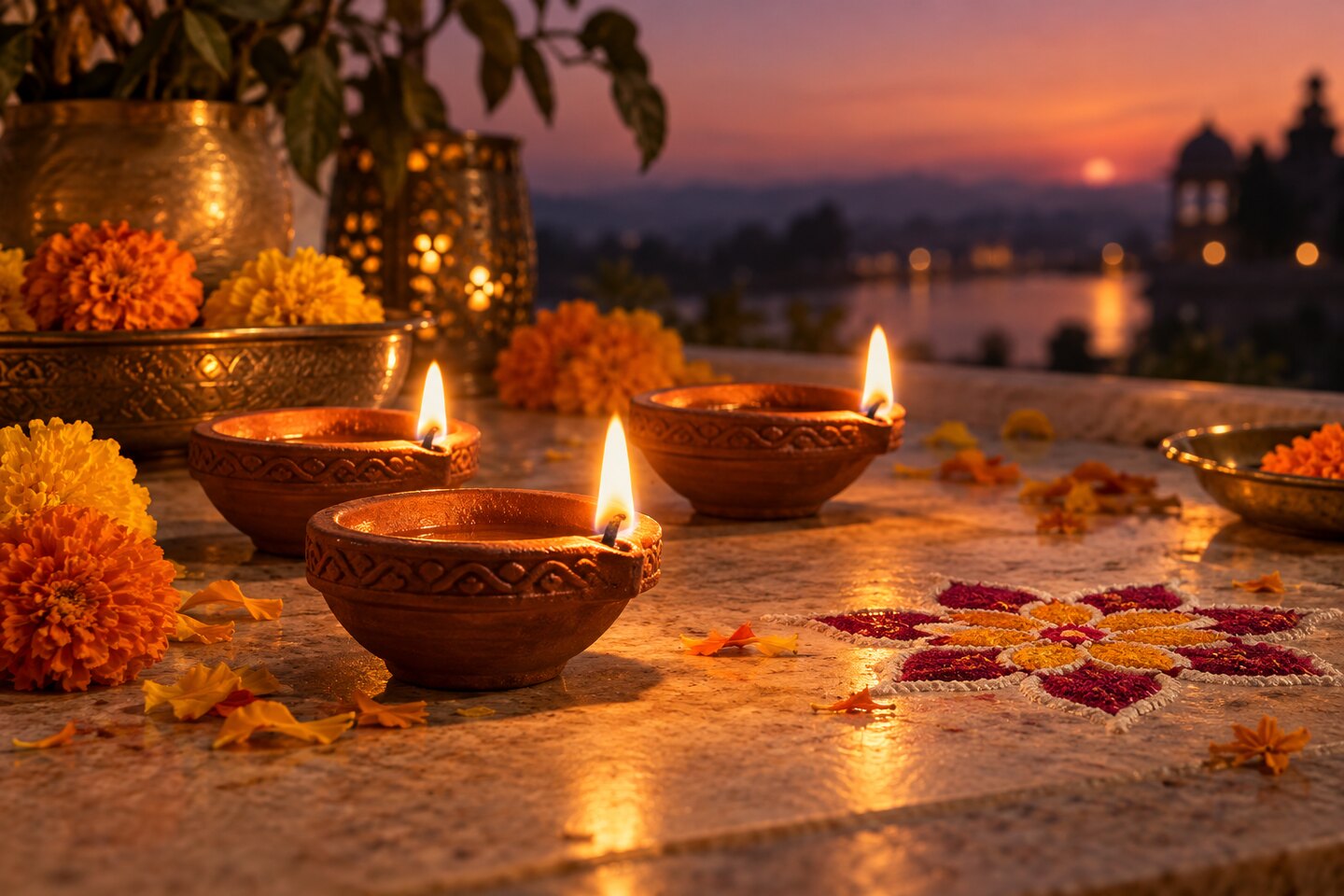
Diwali, also called Deepavali, is widely known as the festival of lights. Lamps and illuminated homes give the celebration its instantly recognizable visual language. The Smithsonian’s National Museum of Asian Art presents the festival through light, food, music, dance and shared activities.
The festival is celebrated in different ways across communities. This introduction is not a guide to every religious or regional practice. Ask your recipient which name, language and traditions feel right to them rather than treating one household’s celebration as universal.
Why there is more than one origin story
The Open University explains that Deepavali combines Sanskrit terms associated with light or lamps and a row or series. Its account describes early textual references and a festival whose origins reach further back than those references. Assigning it one simple founding year would be misleading.
In one widely told narrative from the Ramayana, Rama, Sita and Lakshmana return to Ayodhya after exile. Other communities emphasize different stories, including Krishna and Satyabhama’s defeat of Narakasura. Jain observance connects the season with Mahavira’s liberation; for Sikhs, it coincides with the remembrance of Guru Hargobind’s release from imprisonment. These are distinct religious meanings rather than interchangeable versions of a party theme.
Context source: The Open University — What is Diwali? by Suzanne Newcombe ↗
The details around the light
The same Open University account notes that celebrations extend over several days and that communities place emphasis on different days. Exchanging sweets and wearing new clothes are among the customs it discusses. These examples help explain why a greeting can feel familiar to one family and unfamiliar to another even when both celebrate Diwali.
When asking someone about their celebration, try a concrete question: “Is there a sweet you always make?” or “What did the entrance to your childhood home look like?” A specific answer gives you a respectful visual starting point. It is usually more useful than asking someone to explain an entire faith or regional tradition.
Context source: The Open University — What is Diwali? by Suzanne Newcombe ↗
A meaningful greeting across distance
Imagine sending a card to a parent overseas. A picture of lamps might be lovely, but a note about the evening you used to spend together makes it personal: “Missing the way we all gathered at home. Sending love until we can be together again.” The cultural symbols set the scene; the relationship supplies the meaning.
For a work contact, do less guessing. A simple wish for a joyful Diwali may be enough. Do not add religious invocations, invented ceremonial details or a promise of prosperity on their behalf unless you know those choices fit. If a colleague has told you how they celebrate, reflect that detail naturally.
For an illustrated family portrait, specify the people, clothing and setting you actually want. Avoid a vague instruction to make everyone “traditional,” which may produce an inaccurate blend of styles. Review names, language, hands, faces and any ceremonial objects before approving the finished image.
Make room for a family’s own traditions
A greeting can be inspired by a row of lamps, an entrance decorated for guests or a sweet passed around a family table. The strongest detail is often one you actually remember. If you use a photograph, tell the creative agent who is pictured and which details you want to preserve.
Dates can differ with locality and calendar conventions. Use the regional calendar as a planning aid and confirm the date with your recipient or local community before scheduling a greeting.
A wish that works across relationships
For a close relative, mention something you hope to share again: a visit, a meal or an evening together. For colleagues, a warm wish for happiness and a peaceful celebration is a considerate starting point. Use religious language only when you know it fits.
Review names and non-English lettering before sharing. A beautiful illustration cannot make up for an incorrect name or a message that sounds unlike you.
A little starting inspiration
For family: “May your home be full of light, laughter and the people you love. Happy Diwali!”
For a colleague: “Wishing you and your family a joyful Diwali and a bright season ahead.”
These are original message suggestions. Add a name, a memory or an inside joke to make yours personal.
Create a Diwali greeting →Common questions
Should I say Diwali or Deepavali?
Both names are used. Follow the wording your recipient or their community uses rather than assuming one name is universally preferred.
Why does the calendar date change?
The festival follows traditional calendar calculations rather than a fixed Gregorian date. Regional conventions and the particular day being observed can affect the date; confirm locally when planning.
Sources & further reading
Historical context is summarized from the resources below. Our suggested messages and celebration ideas are original editorial suggestions.
Prepared with AI assistance and source checks on October 18, 2026. No specialist or community review is claimed. Traditions can vary; follow your recipient’s preferences. Historical context and original writing suggestions are distinguished in the text.