Halloween: old traditions, new ways to connect
From harvest folklore to neighborhood costumes, explore the layers behind Halloween and write a greeting that suits your favorite people.
A celebration with many layers
Halloween falls on October 31. Its history connects harvest-season customs, the Christian calendar and traditions that changed as people moved between countries. The Library of Congress describes connections with Samhain and All Hallows’ Eve, the evening before All Saints’ Day. There is no single origin story that explains every modern custom.
Even familiar symbols have traveled. Irish lantern-carving traditions used turnips before pumpkins became an American favorite. The origins of trick-or-treating are debated; accounts point to several customs involving disguises, visiting neighbors and exchanging performances or prayers for gifts.
From All Hallows’ Eve to the neighborhood doorstep
The name Halloween comes from All Hallows’ Eve, the evening before All Saints’ Day on November 1. The Library of Congress connects the season with older harvest traditions as well as the Christian calendar. That is useful context, but it does not mean that every present-day party game has one ancient, traceable beginning.
One distinction matters when telling the story: a historical custom, a later explanation of that custom and a piece of folklore are not the same kind of evidence. The tale of Stingy Jack belongs to the folklore surrounding lanterns. It should not be presented as the documented biography of a real person.
Context source: Library of Congress — The Origins of Halloween Traditions ↗
How the treats changed
The Smithsonian’s National Museum of American History describes individually wrapped candy as a relatively recent development in the American trick-or-treating custom. Its collection places the treats alongside changing household routines, packaging and everyday objects. Halloween history is therefore also a story about how ordinary people shop, entertain and welcome their neighbors.
That shift is a useful fact to bring to a family conversation: the celebration a grandparent remembers may look different from a child’s experience now. Ask what people received at the door, which costumes they made themselves and whether the neighborhood had its own traditions. Those answers give an actual family story more substance than a list of generic spooky symbols.
Context source: National Museum of American History — From homemade Halloween treats to colorfully packaged candies ↗
Turn a costume memory into a card
Start with the photograph’s story. “My brother and I dressed as astronauts in our backyard” tells a designer more than “make this Halloween themed.” Keep one recognizable detail, such as the homemade helmet or the family dog who wandered into the picture. Then choose whether the new artwork should preserve the original snapshot or reimagine the scene.
For a child, make the joke about the costume rather than the person. For an old friend, reference the adventure you both remember without revealing an embarrassing detail to everyone who might see the card. If you are sending to a group, a short shared joke works better than a private reference that excludes most recipients.
An easy activity for a gathering is a two-photo card: one costume from childhood and one recent picture. Ask permission before using either image. Add a caption explaining the connection, and keep the message readable at phone size. The result is a small record of friendship, not merely a seasonal decoration.
A small detail worth sharing
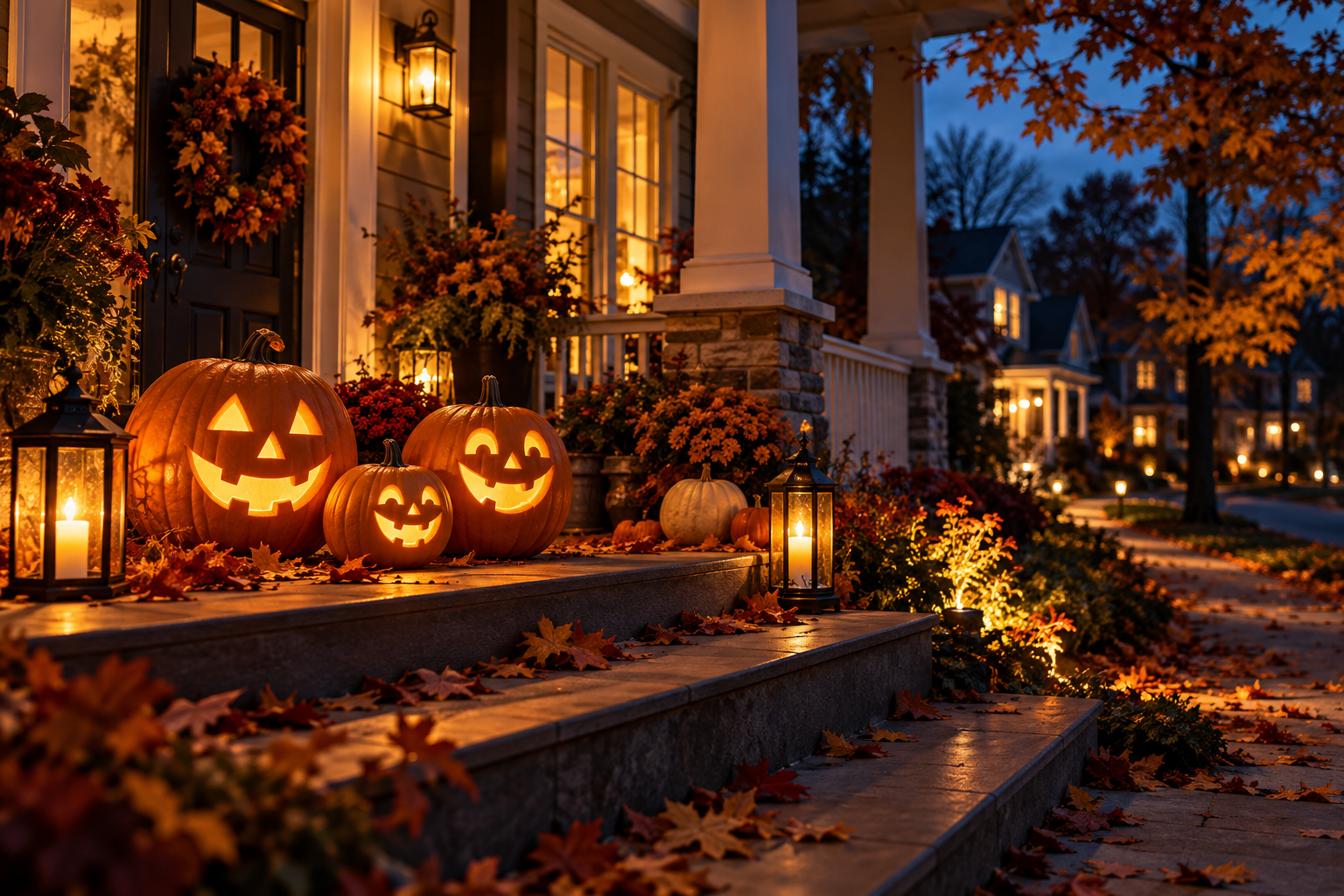
A lantern does not have to be a pumpkin to belong to Halloween’s story. That change in material is a reminder that traditions are adapted by the people who keep them alive. A family’s homemade costume or annual porch photograph can be just as meaningful as a familiar seasonal symbol.
Choose friendly, funny or delightfully spooky
For young children, try smiling pumpkins and a friendly pet in costume. For a sibling or college friend, a shared costume memory can make a better starting point than a generic haunted house. Ask before turning someone’s real photo into a joke.
Keep the message short enough to read on a phone. Name one shared memory, add a playful wish and finish with your own sign-off. Avoid frightening imagery if you are unsure how the recipient feels about it.
A little starting inspiration
For a friend: “Still my favorite partner in harmless mischief. Happy Halloween!”
For family: “Wishing our favorite little monsters a night full of smiles.”
These are original message suggestions. Add a name, a memory or an inside joke to make yours personal.
Create a Halloween greeting →Common questions
Is Halloween the same as Día de los Muertos?
No. They are distinct observances. Avoid combining their symbols or describing one as a version of the other; learn about the particular tradition you want to acknowledge.
What can I write if someone dislikes scary imagery?
Use a playful autumn scene and a friendly wish. Smiling pumpkins, a costume memory or an affectionate pet portrait can carry the occasion without horror.
Sources & further reading
Historical context is summarized from the resources below. Our suggested messages and celebration ideas are original editorial suggestions.
Prepared with AI assistance and source checks on October 18, 2026. No specialist or community review is claimed. Traditions can vary; follow your recipient’s preferences. Historical context and original writing suggestions are distinguished in the text.