Kwanzaa: community, creativity and connection
Discover the seven-principle framework behind Kwanzaa and make a greeting grounded in care for the people around you.
A week centered on shared values
Kwanzaa is observed from December 26 through January 1 in celebration of African heritage and culture. The National Museum of African American History and Culture describes its seven principles: unity, self-determination, collective work and responsibility, cooperative economics, purpose, creativity and faith.
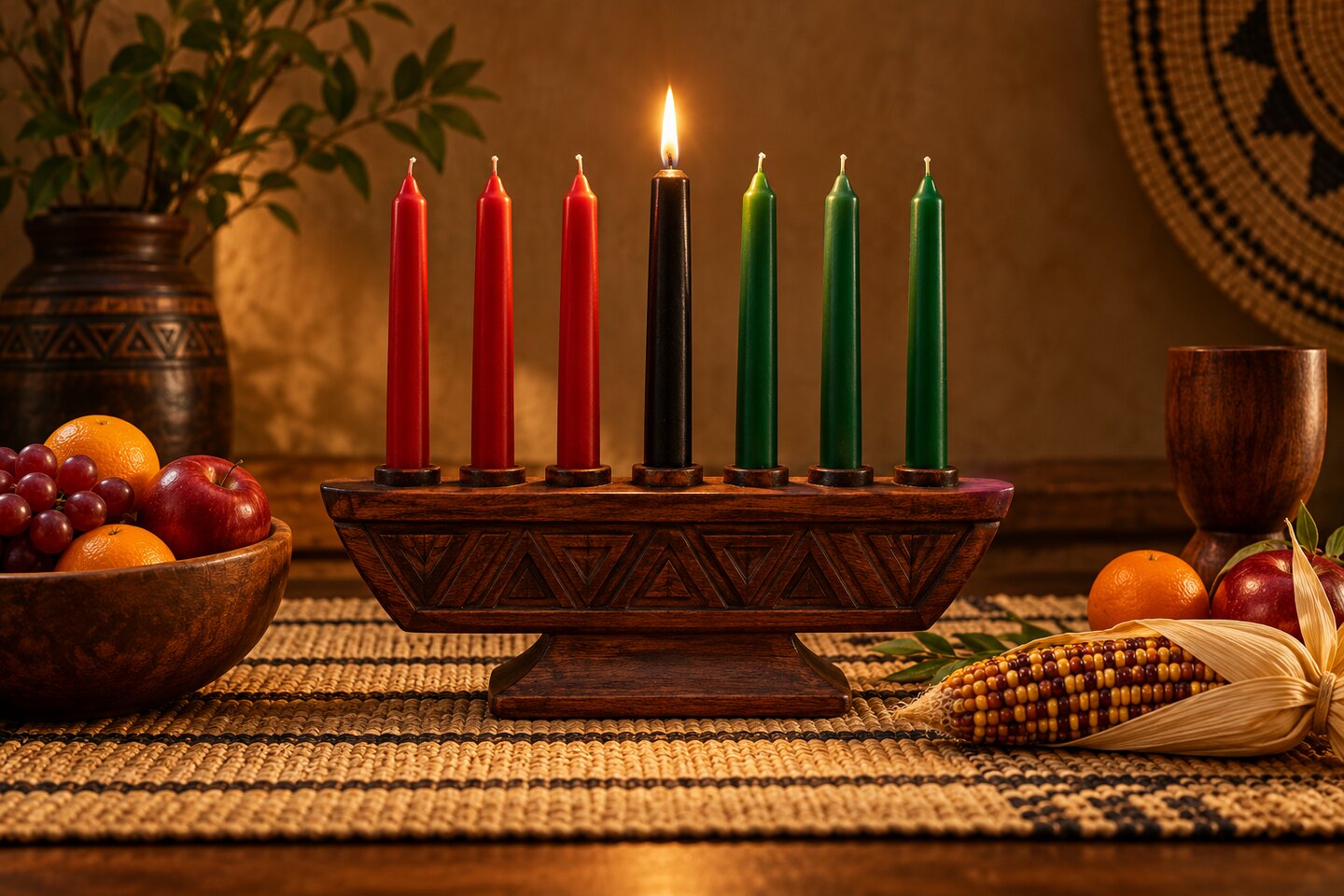
The museum explains that candles and a decorated table help give these principles expression. A kinara holds the candles; the mkeka is a mat. Fruit, corn and gifts are among the other symbols described in its educational resources.
A modern holiday with a deliberate purpose
The National Museum of African American History and Culture identifies Maulana Ron Karenga as Kwanzaa’s creator in 1966. It describes an African American and Pan-African celebration of history, values, family, community and culture. This is a modern holiday with a particular history, not a claim that all African cultures share one annual festival.
Knowing who created it and when helps avoid vague descriptions of an anonymous “ancient African tradition.” At the same time, a founding date is only the beginning of its story. Families and communities give the principles expression through what they choose to remember, make and do together.
Context source: National Museum of African American History and Culture — Kwanzaa ↗
What the principles invite people to consider
The museum names the principles in Swahili: Umoja, Kujichagulia, Ujima, Ujamaa, Nia, Kuumba and Imani. In English, they concern unity, self-determination, collective work and responsibility, cooperative economics, purpose, creativity and faith. Its resources show how activities, poetry, music and shared meals can give the words practical meaning.
For a personal greeting, choose one value you have actually seen in the recipient’s actions. Perhaps they brought neighbors together after a difficult event or encouraged someone’s creative work. You are not assigning them a role or grading their commitment to a principle; you are thanking them for something specific.
Context source: National Museum of African American History and Culture — The Seven Principles of Kwanzaa ↗
Let a greeting lead to a real gesture
A note to a relative might say, “Thank you for keeping our family stories alive.” A note to a community volunteer might name the afternoon they spent helping a neighbor. The strength comes from recognizing the work, rather than repeating seven abstract words without showing what they mean in your relationship.
If you offer help, keep the offer realistic. Sharing a family recording, making time to listen or helping prepare a gathering can be meaningful. Avoid claiming that sending a card automatically supports a community cause or makes a charitable contribution. A promise belongs in the message only if you intend to carry it out.
For artwork, check the symbols with care and leave room for the words. Our image is an AI-created still life with seven candles; it is not a documentary photograph or an instruction for a lighting ceremony. If the recipient’s own celebration is your inspiration, ask permission to use a photo and preserve the details they care about.
Begin with something you appreciate
A greeting might recognize a neighbor who brings people together, a relative who encourages creativity or a friend who quietly supports their community. Name what you have seen them do rather than turning a principle into a vague compliment.
If you are new to the celebration, use the museum resources as a starting point and follow the lead of the person you are greeting. Do not assume that every person of African heritage observes Kwanzaa.
Make a small, meaningful gesture
You could send a personal note of thanks, share a photograph with permission or offer time for a community activity. Choose a gesture you can actually follow through on. A card can open a conversation without trying to summarize the whole celebration.
For the design, ask for intentional symbols and plenty of space for your words. Review the finished image carefully: decorative AI artwork is inspiration, not a substitute for an accurate cultural reference or a guide to observance.
A little starting inspiration
For a friend: “Celebrating the care and creativity you bring to our community. Joyous Kwanzaa!”
For family: “Wishing you a meaningful Kwanzaa and a season of connection, purpose and joy.”
These are original message suggestions. Add a name, a memory or an inside joke to make yours personal.
Create a Kwanzaa greeting →Common questions
When is Kwanzaa observed?
It runs from December 26 through January 1. The seven days focus on the seven principles.
Should I assume everyone of African heritage celebrates Kwanzaa?
No. Ask or follow what the recipient has shared with you. Heritage alone does not tell you which holidays someone observes.
Sources & further reading
Historical context is summarized from the resources below. Our suggested messages and celebration ideas are original editorial suggestions.
Prepared with AI assistance and source checks on October 18, 2026. No specialist or community review is claimed. Traditions can vary; follow your recipient’s preferences. Historical context and original writing suggestions are distinguished in the text.